

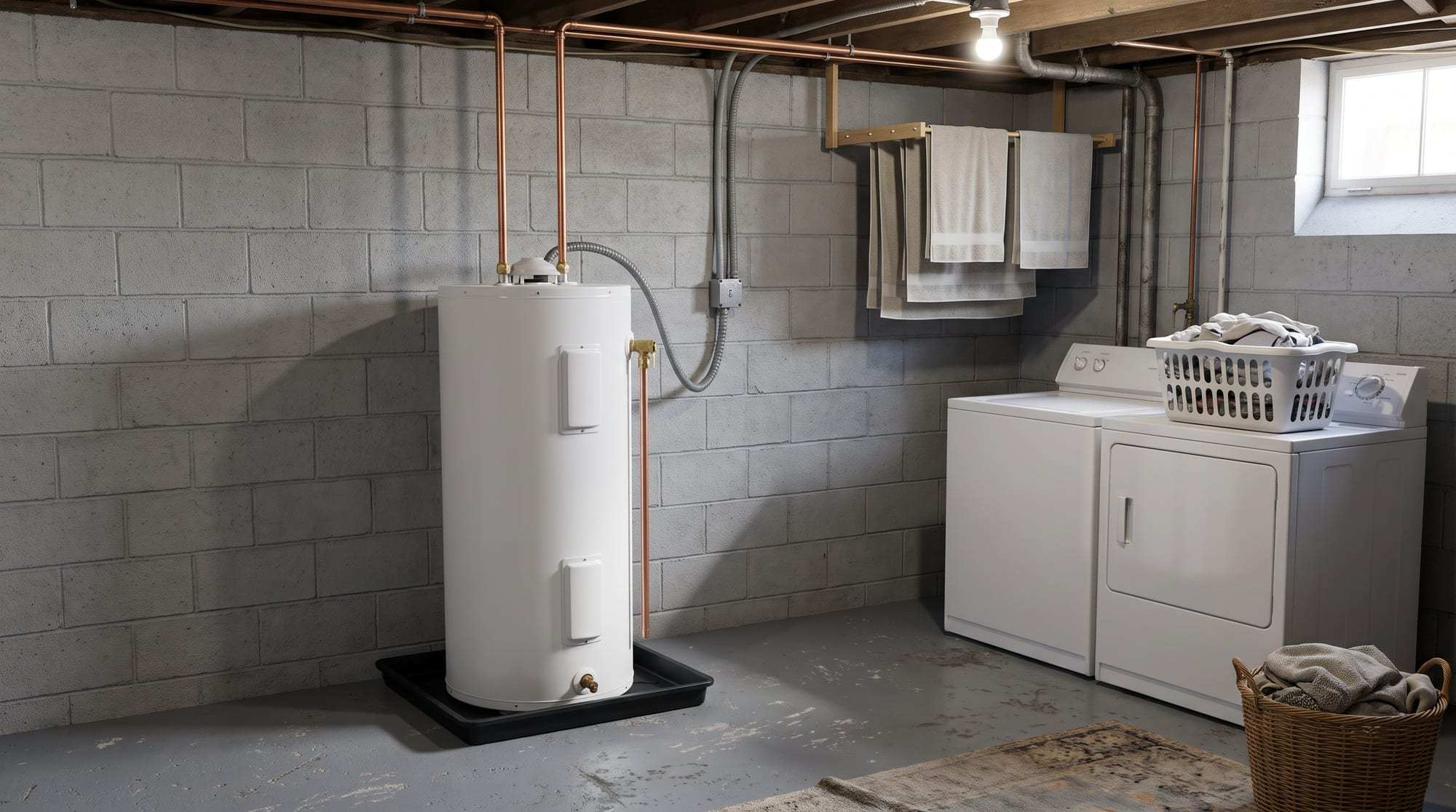
When the Hot Water Changes
Cherrington Plumbing repairs and replaces tank water heaters, gas and electric, for homes and rental properties around Westerville, from a failed element or pilot assembly to a tank that has started to leak.
A water heater usually gives some warning before it fails completely. The hot water runs out a little sooner, the tank starts to rumble, or a small puddle appears under the drain valve. Paying attention to those changes gives time to plan a replacement instead of waking up to a cold shower and a wet floor.
Signs to Watch For
- No hot water, or hot water that runs out early
- Rusty, brown or cloudy water from the hot taps
- Popping, rumbling or banging from the tank
- Water pooling around the base of the tank
- A relief valve that drips or discharges
- A unit approaching ten years of age or more
Repair or Replace?
The question usually comes down to the tank itself. Elements, thermostats, gas valves, thermocouples and dip tubes are replaceable parts, and a sound tank with a failed part is normally worth repairing. A tank that leaks, or one producing rusty water late in its life, is not. Between those two cases, age, the household’s hot water needs and how often the unit has needed work all play a part.
Anyone weighing a replacement can compare tank sizes, fuel types and tankless units in the water heater buyer’s guide.
Symptoms and Likely Causes
The table below pairs the common complaints with their usual causes and whether they tend to call for a repair or a new unit. It is a guide, not a diagnosis: the same symptom can have more than one cause.
| Symptom | Possible cause | Repair or replace? | Notes |
|---|---|---|---|
| No hot water at all | Tripped breaker or failed element (electric); pilot out, failed thermocouple or gas valve (gas) | Usually repair | Check the breaker or pilot first; a unit that keeps failing is worth a closer look |
| Hot water runs out early | Failed lower element, broken dip tube, heavy sediment, or a tank too small for the household | Repair, unless the tank is undersized | A broken dip tube mixes cold water into the hot supply |
| Rusty or brown hot water | Corrosion inside the tank once the anode rod is used up | Often replace on an older tank | If only the hot side is rusty, the tank is the likely source |
| Popping or rumbling | Sediment layer on the tank bottom boiling under the burner or element | Repair or flush | Hard water builds sediment faster; flushing helps if done early |
| Water at the base | Leaking drain valve, loose fitting, relief valve discharge, or a tank that has rusted through | Depends on the source | A leak from the tank itself cannot be repaired |
| Relief valve dripping | Pressure or temperature too high, or a worn valve | Repair | Never cap or plug a relief valve or its discharge pipe |
Check These First
- On an electric unit, check the breaker panel for a tripped water heater breaker and reset it once. If it trips again, leave it off and call.
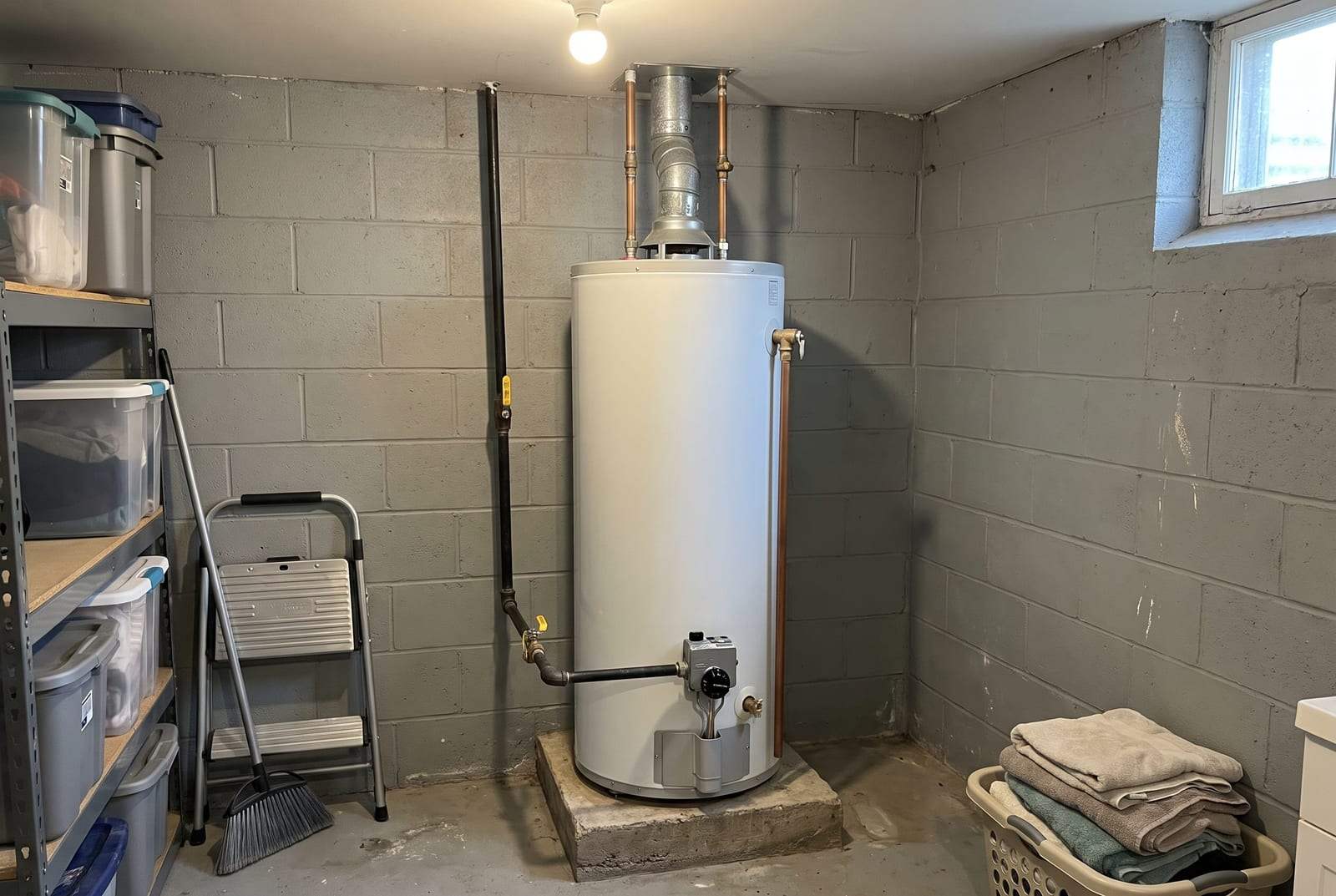
- On a gas unit, look through the sight glass near the base to see whether the pilot is lit. Follow the relighting instructions on the tank label only if there is no smell of gas; if you smell gas, leave the house and call the gas utility.
- Check the thermostat setting. A dial turned down during cleaning or a recent visit is a common reason for lukewarm water.
- Look for water around the base, at the drain valve, at the fittings on top and at the end of the relief valve pipe, and note where it is coming from.
- If the tank itself is leaking, turn off the power or set the gas valve to pilot, and close the cold water valve above the tank.
Each repair or replacement starts with a written estimate that explains what is included, so the choice between fixing and replacing is made with the details in hand.
Water Heater Questions
How long does a tank water heater usually last?
Many tank water heaters give eight to twelve years of service, depending on the water, the maintenance and the original quality of the unit. Age alone does not mean a tank must go, but an older tank with rusty water or a leak at the base is rarely worth repairing.
Is it worth repairing an older water heater?
Parts such as elements, thermostats, thermocouples and dip tubes are routine repairs on a sound tank. When the tank itself leaks or the water inside is rusty, replacement is the usual answer. The estimate sets out both options where both are reasonable.
Why does my water heater make popping sounds?
Sediment from the water settles on the bottom of the tank. Water trapped under that layer boils and pops as the burner or element heats it. Flushing the tank can reduce the noise if the layer has not hardened; the seasonal maintenance guide shows how.
Should I switch to a different type when replacing?
Sometimes. A household that has grown, a basement being finished, or a wish for endless hot water can each point to a different size or type. The water heater buyer’s guide compares the options without quoting prices.
What happens to the old water heater?
On a replacement, the old unit is drained and disconnected before the new one goes in. Ask about removal when you schedule, so it is included in the written estimate.
Book a Water Heater Visit
Note the age of the unit if you know it, whether it is gas or electric, and what changed, then call or send the request form.