

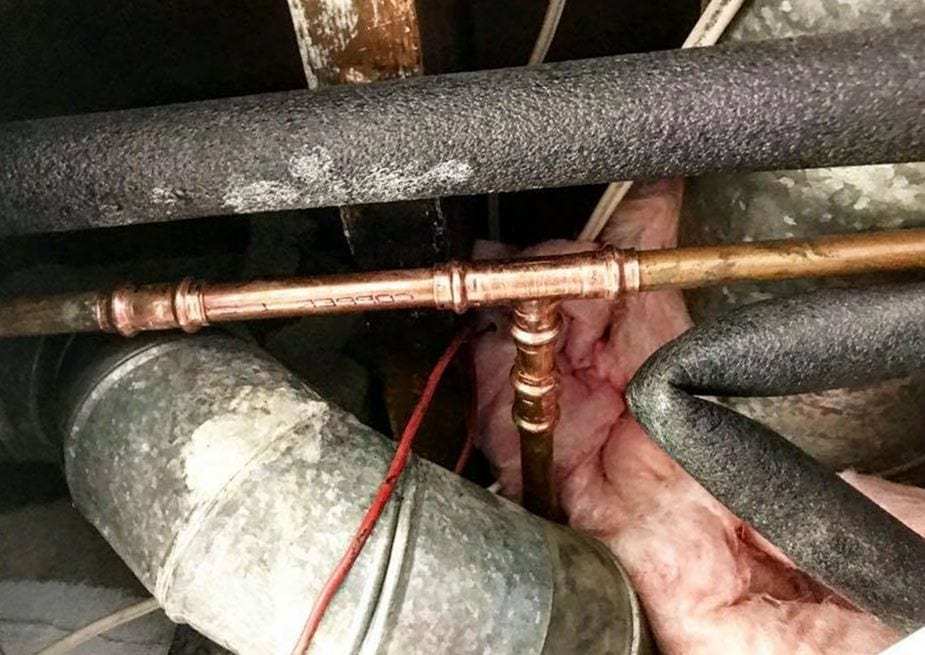
Central Ohio puts a house’s plumbing through freezing winter nights, a thaw that can come quickly, and wet springs that keep sump pumps busy. A few tasks at the right time of year prevent most of the emergencies that follow.
The planner below builds a task list for each season from the features your house actually has. The table, the step-by-step instructions and the checklist that follow cover the same tasks in more detail.
Maintenance Planner
Build Your Seasonal List
Tick the features your house has, then press Show My Task List.
The Year at a Glance
| Season | Task | Why it matters in central Ohio | Fixture or system |
|---|---|---|---|
| Spring | Test the sump pump | Wet springs and snowmelt raise the water table when the pump has sat idle for months | Sump pump |
| Spring | Check spigots for freeze damage | A split inside the wall may only leak when the spigot is first used | Outdoor spigots |
| Summer | Clean aerators and shower heads | Minerals in the water collect in small openings over time | Faucets and showers |
| Summer | Test the relief valve | A valve that has not moved in years may stick when it is needed | Water heater |
| Autumn | Flush the water heater | Sediment settles in the tank, shortening its life and making noise | Water heater |
| Autumn | Drain outdoor spigots | Hard freezes are common from late autumn through winter | Outdoor spigots |
| Autumn | Insulate exposed pipes | Pipes on outside walls and in crawl spaces freeze first | Supply lines |
| Winter | Keep cabinet doors open on cold nights | Warm air reaches pipes on exterior walls | Kitchen and bath supply lines |
Prepare Outdoor Spigots and Exposed Pipes for Freezing Weather
- Disconnect every garden hose. A hose left on traps water in the spigot, and that water freezes first.
- Find the shutoff valve for each outdoor spigot inside the house, usually on the basement ceiling near the wall, and close it.
- Open the outdoor spigot and leave it open so any remaining water can drain out.
- If the inside valve has a small drain cap, open it over a bucket, then close it again.
- Wrap pipes along outside walls, in crawl spaces and in unheated garages with foam pipe insulation, and seal drafts where pipes pass through the foundation.
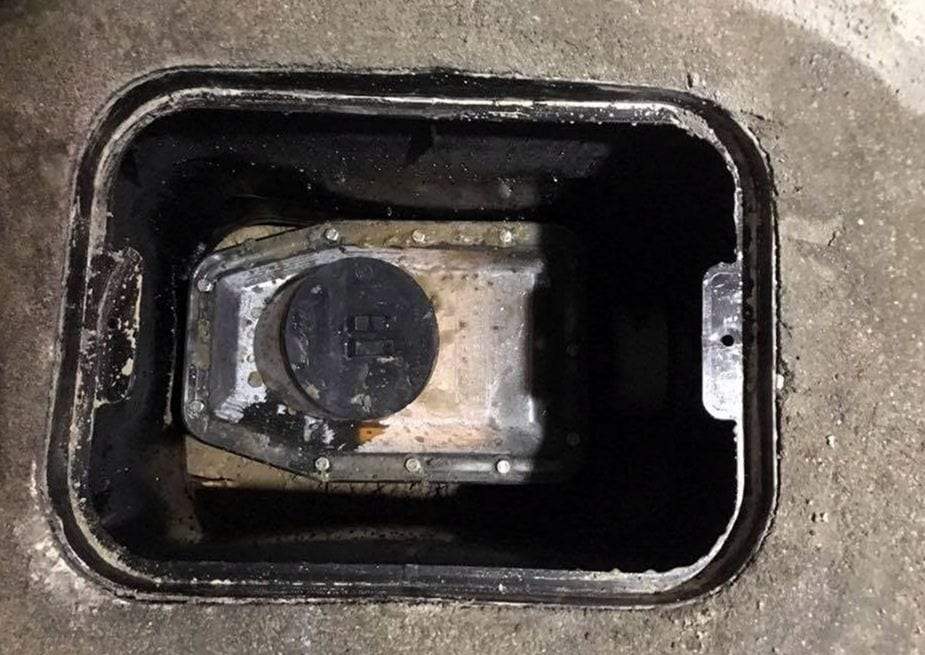
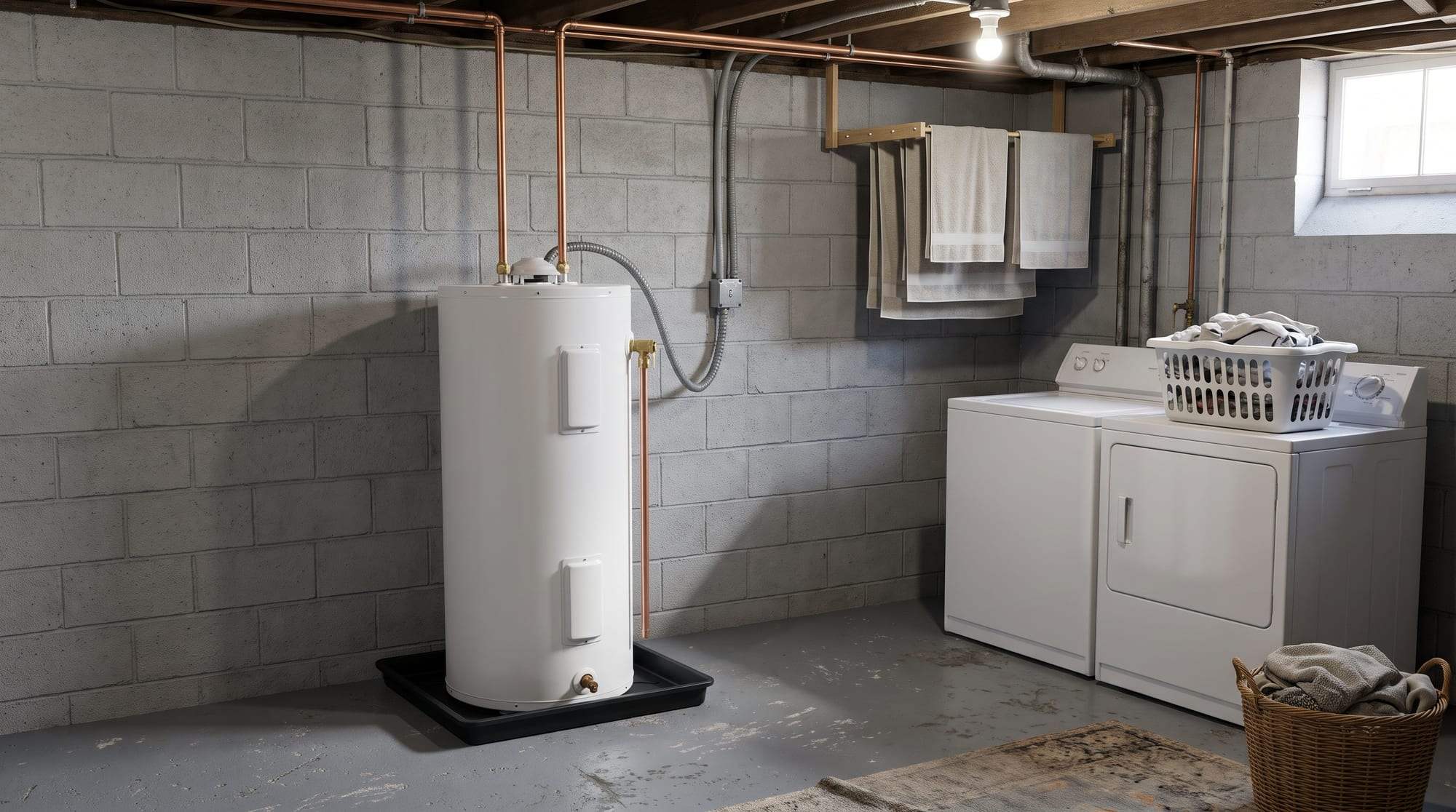
Flush a Tank Water Heater
- Turn the power off at the breaker on an electric heater, or set a gas heater’s control to pilot.
- Close the cold water valve above the tank.
- Attach a garden hose to the drain valve at the base and run it to a floor drain or outside.
- Open a hot water faucet upstairs to let air in, then open the drain valve. The water is hot: keep hands and pets clear.
- Once the tank is empty, briefly open the cold valve to stir up the remaining sediment, and let it drain until the water runs clear.
- Close the drain valve, remove the hose, open the cold valve and let the tank fill until water flows steadily from the open faucet.
- Only then restore the power or turn the gas control back on. An electric element switched on in an empty tank burns out.
Before a Cold Snap
- Garden hoses disconnected and spigots drained
- Cabinet doors open on outside walls
- Thermostat set no lower than 55 °F
- Garage door kept closed if pipes run through the garage
- A faucet on an outside wall left at a slow drip
- Main shutoff valve found and clear of stored boxes
Frozen Pipes and Hard Water
How do I know if a pipe has frozen?
A faucet that gives only a trickle, or nothing, on a very cold morning is the usual sign, especially one on an outside wall. Frost on an exposed pipe or a bulge in it are others. Leave the faucet open, keep the area warm with a hair dryer or space heater kept well away from anything flammable, and never use an open flame.
What if a frozen pipe has already split?
Close the main shutoff valve right away, before the pipe thaws and the water starts to flow, and then call. A split often shows only once the ice melts.
Does hard water matter for plumbing?
Minerals in the water settle as scale in water heaters, faucet aerators and shower heads, and as sediment at the bottom of a tank. How hard the water is depends on the supply: treated city water is usually softer than water from a private well. White crust on fixtures and a water heater that pops and rumbles are the common signs; flushing the tank, cleaning aerators and, where the water is very hard, a water softener all help.
Do I need to drain my water heater every year?
A yearly flush is a common recommendation where water is hard. It removes loose sediment before it hardens. On a tank that has never been flushed, sediment may clog the drain valve, and it is better to call than to force it.
Should I shut off the water when leaving for a winter trip?
Closing the main shutoff valve and leaving the heat on limits the damage if a pipe does fail while the house is empty. Turn the water heater to its vacation setting as well.