

Replacing a water heater is a decision most households make once a decade, often in a hurry. This guide sets out the main types, what suits which house, and the factors that shape the cost, so the choice can be made with confidence. It does not quote prices: those depend on the house and are set out in a written estimate.
Options Comparator
Compare Suitable Types
Choose the household size, the space and the fuel, then press Compare Options.
Water Heater Types
| Type | How it works | Best suited for | Space and installation needs | Points to weigh |
|---|---|---|---|---|
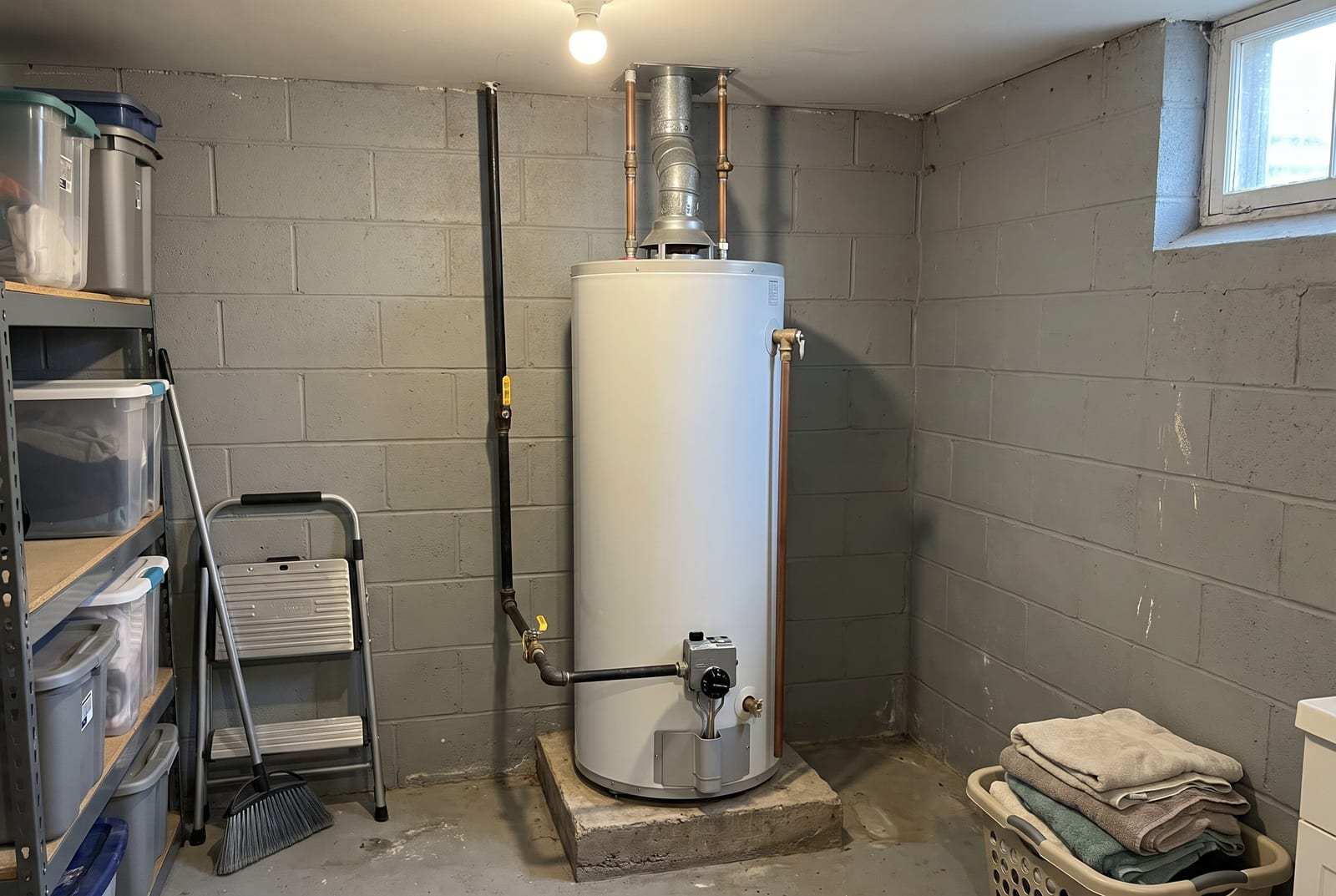
| Gas tank | A gas burner under the tank heats a stored supply, usually 40 to 75 gallons, vented up a flue | Homes with natural gas and a basement or utility room | Floor space, a gas line, a vent to the chimney or outside, a drain pan where a leak could cause damage | Quick recovery after heavy use; standby heat loss; needs a working vent |
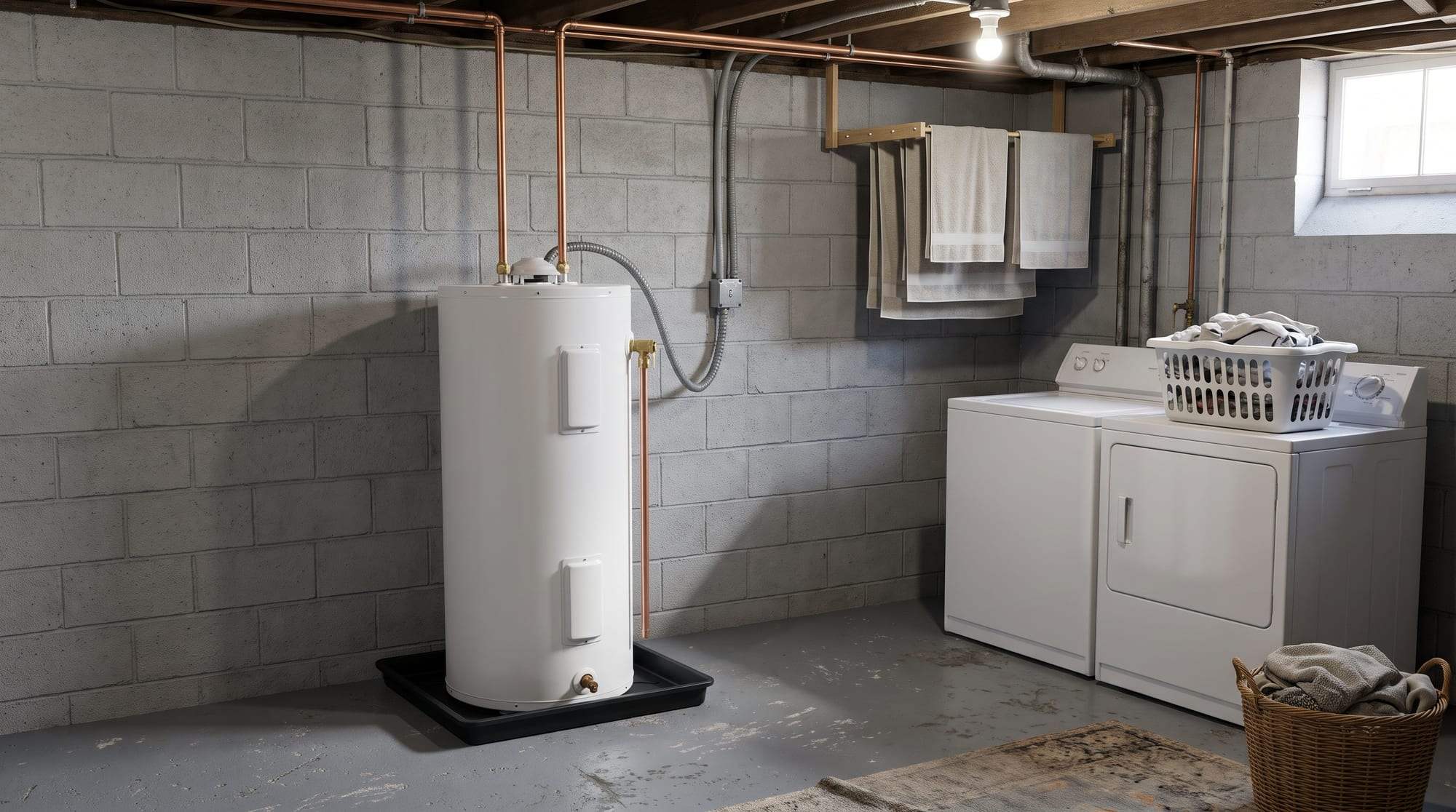
| Electric tank | Two elements heat the stored water; no flame and no vent | Homes without gas, or a small household with modest use | Floor space and a dedicated electrical circuit | Simple to install; slower recovery than gas |
| Gas tankless | A burner heats water only as it flows, from a unit mounted on the wall | Households that run out of hot water, or where floor space is short | Wall space, a larger gas line, its own venting, and a yearly descaling where water is hard | Hot water does not run out; flow is limited when several fixtures run at once |
| Electric tankless | Heating elements warm water as it flows | Small households or a single point of use | A large electrical supply, often more than an older panel can give | Compact; struggles with a whole house’s demand in an Ohio winter, when the incoming water is cold |
| Heat pump (hybrid) | Draws heat from the surrounding air into a tank, with elements as a backup | Basements and large utility rooms that stay above about 40 °F | Room around the unit for air, a condensate drain, a dedicated circuit | Uses much less electricity than a standard electric tank; cools the space around it and makes some noise |
What Shapes the Cost
Two replacements of the same size can differ a good deal, because the work around the heater varies from house to house. These are the factors that move the total, and what to look at before asking for an estimate.
| Cost factor | How it affects the total | What to check at home |
|---|---|---|
| Type and fuel | Moving from one type to another, or from electric to gas, adds work beyond a like-for-like swap | Is there a gas line near the heater? What does the current label say? |
| Capacity | A larger tank or a higher-output tankless unit costs more and may need larger supply lines | How many people shower in the morning? Does the hot water run out now? |
| Venting | A new gas unit must vent safely; some need a new vent or a liner | Where does the current vent pipe go? Is it rusted or loose? |
| Gas line or electrical capacity | Tankless and heat pump units can need a larger gas line or a new circuit | How old is the electrical panel? Is there room for a new breaker? |
| Location and access | A tank in a tight closet, an attic or behind finished walls takes longer to remove and fit | Can a tank be carried out and in along a clear path? |
| Code requirements | Current rules can call for an expansion tank, a drain pan or a proper relief valve line | Is there an expansion tank? Does the relief valve pipe run to near the floor? |
| Nearby valves and piping | A seized shutoff valve or corroded connectors are often replaced at the same time | Does the cold water valve above the tank turn freely? |
Questions to Settle Before Replacing
- Is the current heater gas or electric, and how old is it?
- Does the household run out of hot water now?
- Is a switch of type or fuel on the table, or a like-for-like swap?
- Is there room around the unit for a larger or different model?
- Where would water go if the new tank ever leaked?
- Are the shutoff valve and connectors in good condition?
Choosing and Replacing a Water Heater
What size water heater does a family need?
As a rough starting point, a 40-gallon tank suits one or two people, 50 gallons suits three or four, and five or more people may need a larger tank or a tankless unit. Habits matter as much as head count: back-to-back showers and a large soaking tub push the size up.
Is tankless always the better choice?
Not always. A tankless unit gives continuous hot water and saves floor space, but it needs a larger gas line or electrical supply, its own venting and regular descaling. In a house where the tank is working well and the household’s needs have not changed, a new tank is often the simpler choice.
Can a heat pump water heater work in an Ohio basement?
Usually, if the basement has enough open space and stays above about 40 °F through the winter. The unit draws its heat from the air, so it cools and dries the space around it, which many basements welcome in summer.
Should I replace before the old tank fails?
If the tank is old and showing rusty water or a slow leak, planning the replacement avoids a rushed decision on a cold morning. It also leaves time to compare options and settle the questions in the checklist above.
Why does the estimate list more than the heater itself?
A replacement includes the connections, the venting, the valves and anything current rules require, and the estimate sets out what is included before the work starts.
For repairs, warning signs and what to check when the hot water stops, see the water heater repair and replacement page.